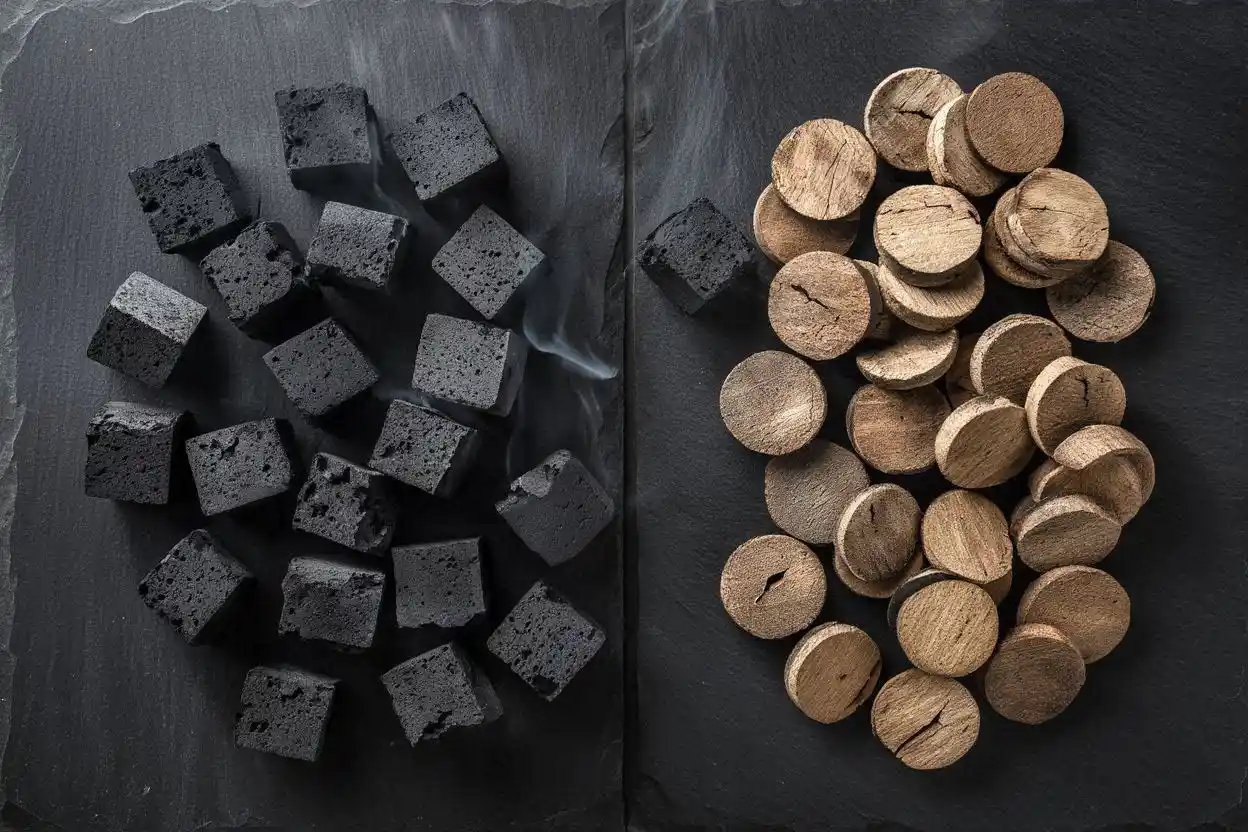
Many hookah users already believe that coconut charcoal better than wood charcoal is not just a preference but a fact backed by real performance. The charcoal you pick determines how long your session lasts, how clean the smoke tastes, and how much ash you deal with afterward.
Understanding the difference between these two options helps both casual smokers and business owners choose more wisely. So let us break it down clearly.
Why Coconut Charcoal Outperforms Wood Charcoal
Coconut shell charcoal comes from the hard shells of coconuts, a natural byproduct of the coconut processing industry. Manufacturers press and carbonize these shells at very high temperatures to create a dense, uniform charcoal cube.
This process creates charcoal that burns cleaner and longer than most alternatives. It generates steady heat without releasing chemical odors, which lets the shisha tobacco express its full flavor throughout the session.
Key advantages of coconut charcoal:
- Burns consistently for 45 to 60 minutes
- Generates minimal ash during use
- Delivers neutral smell and clean taste
- Comes from sustainable agricultural waste
Wood Charcoal Limits Your Hookah Experience
Wood charcoal contains compressed wood powder and chemical accelerants that help it ignite fast. However, these additives push unwanted elements into your smoke from the very first draw.
It burns out in 20 to 30 minutes, dumps heavy ash throughout the session, and shoots a sharp chemical smell into your early draws. For users who care about flavor and session quality, these drawbacks add up quickly.
Key disadvantages of wood charcoal:
- Short burn time requires frequent replacement
- Dumps excessive ash throughout the session
- Chemical smell hits early smoke quality hard
- Costs more over time for regular use
Coconut Charcoal Better Than Wood for Heat Control
One of the strongest arguments for coconut charcoal better than wood charcoal covers heat management. Coconut charcoal holds a stable temperature for the entire session, which stops the tobacco from overheating or burning unevenly.
This stable heat output gives users more control over smoke density and flavor intensity. Whether you prefer light draws or thick clouds, coconut charcoal supports both styles far more reliably than wood charcoal.
Wood charcoal spikes in heat early and fades quickly. This unpredictable behavior frustrates beginners and experienced smokers alike, especially during longer group sessions.
For a thorough breakdown, reading about the differences between coconut and wood hookah charcoal gives you a clearer picture of how each type affects your session technically and practically.
Coconut Charcoal Value for Hookah Businesses
Hookah lounge owners find coconut charcoal a smarter business investment. Its longer burn time cuts the number of charcoal changes per session, which reduces labor and keeps the customer experience smooth.
Clean smoke, consistent heat, and minimal ash build a more premium atmosphere that drives repeat visits. Switching to coconut charcoal pushes customer satisfaction scores noticeably higher.
Business owners who want reliable supplier options can visit indobriquettescharcoal, which offers articles and guides covering charcoal types, quality standards, and sourcing tips.
Conclusion
The case for coconut charcoal better than wood charcoal grows stronger the more you examine the details. Coconut charcoal wins on burn duration, heat consistency, flavor purity, ash production, and long-term value. Wood charcoal offers speed and convenience, but those benefits fade once you experience what coconut charcoal delivers.
For personal users, switching to coconut charcoal transforms every session into a cleaner and more enjoyable experience. For business owners, it signals a commitment to quality that customers genuinely appreciate. Making the switch ranks among the simplest and most impactful decisions any hookah enthusiast or operator can take.

 Aziz Alvian
  Andayani Hayuning Tyas
  Linda
Linda