
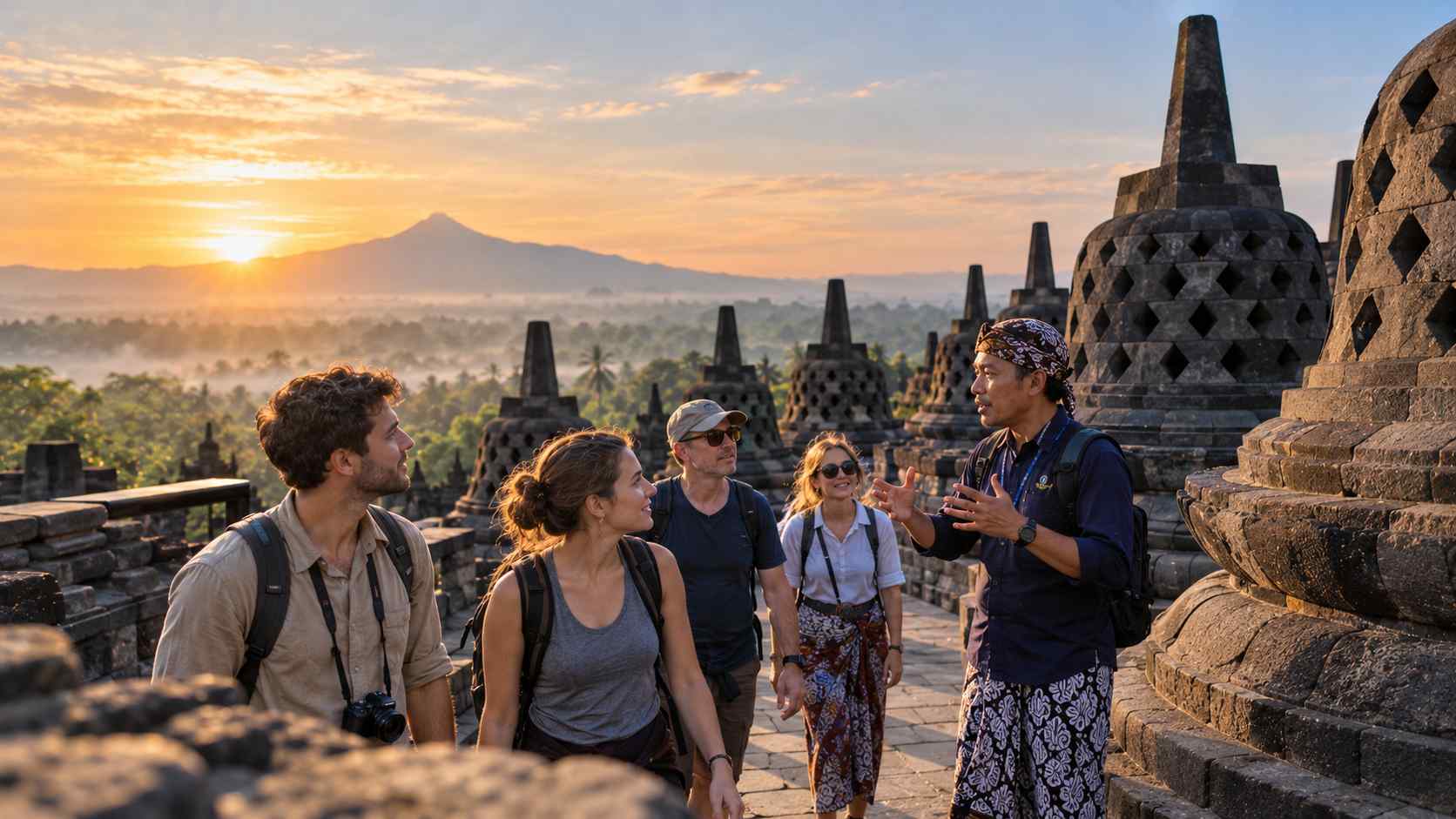
Few places in Southeast Asia combine spiritual depth, architectural ambition and scenic setting the way Borobudur does. Rising from the countryside of Central Java near Magelang, this ancient Buddhist monument draws travelers who want more than a quick photo stop. Understanding what makes the Borobudur tourism experience special will help you plan a visit that feels meaningful rather than rushed. Local operators such as Borobudur Tours build their itineraries around exactly this idea.
A Borobudur Tourism Experience Built in Stone
Borobudur is best understood as a three-dimensional teaching text. Its walls carry intricate stone reliefs that illustrate Buddhist philosophy and narrative, and the structure guides visitors upward through levels that reflect a spiritual journey. Walking the galleries slowly, rather than hurrying to the top, reveals the craftsmanship.
A knowledgeable guide makes a real difference here. Visitors who climb the temple structure are accompanied by a licensed temple guide, who explains the history, architecture, Buddhist philosophy and famous reliefs over roughly one hour. One guide usually leads 10 to 15 visitors, and afterward you can explore the grounds at your own pace.
Sunrise and Golden Hour
Many travelers dream of seeing Borobudur in early light. A Borobudur sunrise puts you at the monument itself, using a special ticket with limited availability. Alternatively, Setumbu Hill, about 15 to 20 minutes away by car, offers a panoramic viewpoint where the temple appears in the distance among mist and mountains. Neither is guaranteed in cloudy or rainy weather, but the dry season, generally April to October, improves your chances of clear skies.
Respecting the Site
Borobudur remains a sacred place, so wear modest clothing that covers the knees. Sarongs are available at the entrance if you need one. Climbers also use special upanat sandals that protect the ancient stone, and drones are not allowed. Following these rules is part of experiencing the monument respectfully.
Beyond the Temple
The surrounding region adds context. Rural villages, rice fields and volcanic scenery shape the setting that sustained the monument. Travelers who book with a local operator often gain insights from their driver-host about daily life, food and traditions that guidebooks rarely cover.
Many visitors also pair Borobudur with Prambanan, the large Hindu temple complex near the border of Yogyakarta and Central Java. Seeing a Buddhist and a Hindu masterpiece in one day shows how layered Java’s religious and cultural history is.
Making Your Borobudur Tourism Experience Comfortable
Arrive early or late to avoid the strongest midday heat, and bring sunscreen, water, a hat and a light rain layer. Booking a tour with hotel pickup, transport and tickets also removes much of the friction. For instance, Borobudur Tours includes tickets that allow you to climb the structure, plus private transport and flexible pickup times, so you can focus on the monument instead of logistics.
Choosing the Right Borobudur Tourism Experience
Culture and history lovers should consider a private temple guide, which is available with a premium ticket and gives you more time for questions. Travelers who want variety can add Prambanan or a Mount Merapi jeep adventure to a longer itinerary. Photographers, meanwhile, should plan around sunrise or the softer afternoon light.
Final Thoughts
The Borobudur tourism experience rewards curiosity and patience. Take your time with the reliefs, listen to the stories behind them, and enjoy the landscape. To explore tour options and ask questions, visit borobudurtours.com.

 Nisha Salsabilla
 Linda
 siticahaya nova